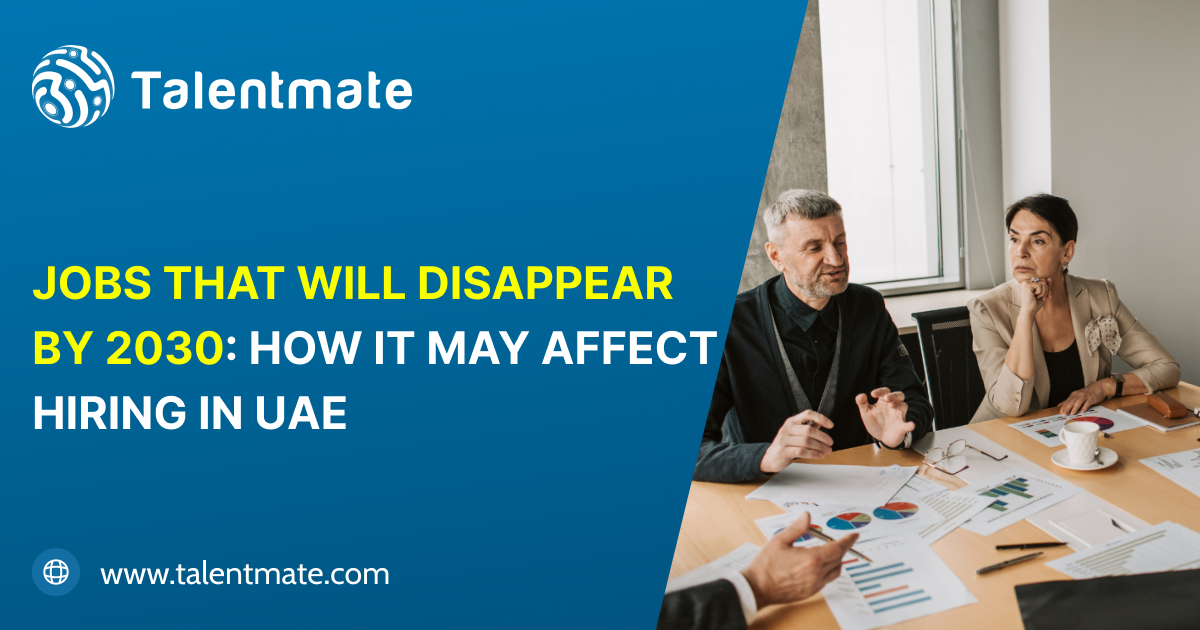
The global job
market is undergoing a major transformation driven by rapid advances in digital
technology. According to the World Economic Forum, global employment is
expected to grow by 14% by 2030, even as around 8% of current roles decline or
disappear. Nearly 39% of jobs worldwide are projected to change, affecting
about 9 million workers.
At the same
time, the digital sector is expected to create new job opportunities for nearly
19 million people, especially in areas such as AI, cybersecurity, data
analytics, and cloud computing. However, this growth does not eliminate the
risks faced by workers whose skills may no longer align with evolving market
demands. Instead, it underscores the urgent need for reskilling and upskilling.
In the United
Arab Emirates, these technological changes are already influencing how
companies hire and the skills they look for. While new roles are opening up,
some traditional jobs are slowly becoming less relevant. Understanding these
trends is crucial for anyone seeking jobs in UAE, whether in
established industries or emerging tech sectors.
This article looks at which jobs may
disappear by 2030 and how these changes could affect hiring practices in UAE.
Understanding the Automation
Revolution
Automation is
all about using machines, software, and AI to take over tasks that were
traditionally done by people. Over the past ten years, businesses have
increasingly turned to technologies like artificial intelligence, robotics,
machine learning, and cloud computing to work faster, cut costs, and operate
more efficiently.
According to global reports, many job roles
are set to undergo major transformation as technologies take over tasks that
were once done manually by humans. These same trends are influencing hiring in
UAE, where major investments in digital innovation are reshaping workforce
needs and defining the future of employment across industries.
Job Roles That Could Become
Outdated by 2030
Not all jobs
are equally at risk. As machines and AI systems become more capable, many
traditional functions may decline or disappear entirely. Even creative fields,
such as graphic design, will face disruptions due to generative AI. The
following job roles are expected to change or disappear in the coming years.
- Postal
service clerks
- Bank
tellers and related clerks
- Data
entry clerks
- Retail
cashiers and ticket clerks
- Administrative
assistants and executive secretaries
- Printing
and related trades workers
- Accounting,
bookkeeping, and payroll clerks
- Material-recording
and stock-keeping clerks
- Transportation
attendants and conductors
- Door-to-door
sales workers, news and street vendors, and related workers
- Graphic
designers
- Claims
adjusters, examiners, and investigators
- Legal
officials
- Legal
secretaries
- Telemarketers
- Basic IT
support roles
- Assembly
line workers
- Machine
operators
- Picking
and handling warehouse workers
- Insurance
underwriters
- Travel
agents
How to Future-Proof Your
Career in 2026
Work today looks very different from how it
did just a few years ago, and it’s changing faster than ever. With job roles
continuing to evolve, many professionals are understandably concerned about
what lies ahead. The truth is, career paths are no longer linear, but that
doesn’t mean you’re stuck or out of options. By taking small, intentional steps
to learn, adapt, and grow, you can stay relevant and confident in a job market
that never stands still.
Learn Skills That Are in
Demand
Watch where the job market is heading. The
skills employers will prioritize in the coming years are shifting rapidly. To
remain competitive, start building your skills now. By 2026, the most
sought-after abilities will include fundamentals of artificial intelligence,
data analysis, digital marketing, user experience design, problem-solving, and
leadership. Investing time in learning these skills today will help you stay
relevant and prepared for the jobs of tomorrow.
Focus on Transferable Skills
While specific
job titles may disappear, transferable skills will remain highly valuable
across industries. Skills such as critical thinking, communication,
adaptability, emotional intelligence, project management, and strategic
decision-making are difficult to automate. In the UAE job market, employers are
increasingly prioritizing candidates who can adapt to change, collaborate
across teams, and solve complex problems rather than those with narrow,
task-based experience.
Professionals
who strengthen these skills will find it easier to transition into new roles,
even if their current job functions are different.
When updating your resume, Talentmate profile, or professional portfolio,
focus on demonstrating measurable results and achievements. Use clear numbers,
outcomes, and impact-driven statements to show your value. This approach is
especially important if you are exploring freelance, contract, or project-based
work, where employers and clients rely heavily on proven results rather than
job titles alone.
Create More Career Options
Relying on a
single job role or industry is becoming increasingly risky in a fast-changing
job market. Having more options gives you security and flexibility. Start by
identifying adjacent roles where your existing skills can be applied. For
example, a traditional marketer can transition into digital marketing, content
strategy, or growth analytics. In the UAE, employers value versatility,
especially in startups, SMEs, and fast-growing sectors where employees are
expected to handle multiple responsibilities.
By expanding your skill set and exploring
different work models, you reduce dependence on any single role and increase
your resilience in an evolving job market.
Jobs That Are Not Disappearing
But Changing
It’s important
to remember that not all job losses are permanent. Many jobs won’t disappear
completely; they will change. As AI takes over routine tasks, people will move
into roles that need strategy, creativity, problem-solving, emotional
intelligence, and leadership, skills that humans do better than machines.
For example:
Marketing
professionals now use AI for data analysis and automation. While some
traditional marketing tasks are becoming less relevant, new roles are emerging
that require a strong understanding of AI-powered tools, platforms like GA4,
data interpretation, strategic decision-making, and creative campaign planning.
Finance roles
are increasingly supported by automation for tasks such as calculations,
reporting, and forecasting. As a result, finance professionals are shifting
toward positions that focus on financial analysis, risk management, strategic
planning, and advisory services. New skills required include financial modelling,
data analytics, familiarity with fintech platforms, regulatory awareness, and
strategic decision-making.
Human resource
roles now rely on AI for resume screening and scheduling, allowing HR
professionals to focus more on talent development, employee engagement, and
workplace culture. To succeed here, professionals need a solid understanding of
HR analytics, AI-based recruitment tools, and workforce planning.
These trends show that while technology may
replace some tasks, it also creates new opportunities, especially in jobs that
rely on technology or human skills.
Hiring Trends in UAE: What’s
Changing?
The shift toward automation is already
influencing hiring in UAE in several ways:
Focus on Digital and Technical
Skills
Employers increasingly seek candidates with
expertise in AI, machine learning, and digital operations. These skills are now
essential across banking, logistics, government services, and more.
Reskilling and Upskilling
Initiatives
To help workers adapt, both the government
and private sector are investing in training programs, certification courses,
and digital literacy initiatives. The UAE has allocated significant funding
toward AI education and skill development to ensure a workforce ready for the
future.
Strategic Hiring Over Routine
Roles
Companies are prioritizing roles that
complement technology rather than duplicate it. For example, instead of hiring
more data entry clerks, firms might hire data strategists, AI ethics experts,
and technology integration leads, shaping the future of hiring in UAE.
Increased Use of Digital
Hiring Tools
Recruitment itself is becoming automated.
AI tools screen resumes, match candidates to jobs, and even conduct initial
interviews. While this speeds up hiring, it also requires job seekers to
emphasize skills and accomplishments that AI algorithms recognize and value.
What This Means for Job
Seekers in UAE
Keep Learning New Skills
Technology is changing quickly, and the
skills needed today may not be enough tomorrow. Job seekers who keep learning
and improving their digital, problem-solving, and communication skills will
have better chances of staying relevant in the job market.
Build Strong Human Skills
Jobs that need creativity, leadership,
emotional understanding, and critical thinking are harder to replace with
machines. Focusing on these human skills can help protect your career in the
long term.
Be Ready for Technology-Based
Roles
Many jobs will change instead of
disappearing. Employees will often work alongside technology.
Look Into Growing Industries
Industries
like artificial intelligence, renewable energy, digital healthcare, and smart
logistics are growing rapidly in the UAE. Building a career in these fields can
open the door to exciting opportunities, stronger job security, and long-term
professional growth.
Technological advances and economic changes
are reshaping the way people work. To keep up with these changes, both
employers and employees need to stay flexible and open to learning new skills.
Reskilling and upskilling will play a key role, as continuous learning will be
essential for success in the future job market.
Still Following the
Traditional Job Application Process?
The job market
in the UAE is evolving faster than ever, and are you still following the
traditional methods of job searching, like sending CVs through email and
waiting for a response? Here’s what job seekers should do differently:
- Be Active on Advanced AI-Powered Job Portals: Most companies now rely on job portals to find suitable
candidates, as these platforms provide access to thousands of profiles and
streamline the recruitment process. Platforms like Talentmate, Indeed, and
LinkedIn use AI to match candidates with relevant roles, screen resumes,
and even generate job postings automatically. Update your profile on job
portals, engage consistently with new job listings, and focus on positions
that suit your expertise. This approach increases your visibility and
improves your chances of being noticed by recruiters.
- Check Job Openings on the Career Page: Many companies in UAE post opportunities directly on their
official career pages as well. Regularly visiting these pages for your
target companies helps you stay ahead of new openings, and apply before
the competition grows.
- Network Strategically: Many
opportunities in UAE come through referrals or professional networks.
Attend industry webinars, virtual events, and forums to connect with
decision-makers and peers.
- Prepare for AI-Enhanced Interviews:
Recruitment platforms increasingly use AI for initial screenings, so create a CV
that’s not just informative but also optimized with relevant keywords,
quantifiable achievements, and clear role-specific skills. Practice
responding to AI-driven assessments or typical screening questions, and be
ready to showcase how your experience aligns with the role.
- Follow
Up Strategically After Interviews: Sending a thoughtful follow-up email following an interview
can make a great impact on recruiters and hiring managers. Thank them for
their time, briefly reiterate your key strengths and interest in the role,
and highlight how your skills align with the position. In a job market
like the UAE, where competition is high, a professional follow-up
demonstrates initiative, reinforces your candidacy, and can help you stand
out from other applicants.
Final Thought
The UAE’s job market is rapidly evolving, driven by technological innovation, automation, and AI adoption. While certain traditional roles are likely to disappear by 2030, this shift also presents new opportunities for those willing to adapt. Success in the future workplace will hinge on continuous learning, embracing transferable skills, and staying ahead of digital trends. For both job seekers and employers in the UAE, the message is clear: flexibility, upskilling, and strategic thinking are no longer optional, they are essential for thriving in a landscape where change is the only constant.